

BA (Hons) Performance and Production
- Entry year:
- 2026/27
- Start date:
- September
- Study mode:
- Full-time
- Course duration:
- 3 years
- Campus:
- Mount Pleasant
- UCAS Code:
- PPDG
Available in Clearing for 2026 entry
Apply now. Call one of our helpful and friendly Clearing advisors on 0808 5 564 565 or complete our online Clearing Application form. Visit our Clearing hub to find out more about Clearing.
Why study this course with LJMU?
- Bring your own ideas to life and develop work based on your unique interests, helping you discover your voice as a professional creator
- Collaborate with other creators including students on your course, across creative departments, and with regional partners to produce work that resonates with today's audiences
- A degree built around three dynamic strands: Performance, Engaged Practices, and Production, each designed to connect and enhance your creative skills, empowering you to create original work
- Develop your performance skills and abilities for both live and recorded settings, whether it's drama and acting, voice work, film, radio, podcasts, or presenting
- Push the boundaries of creativity through a mix cutting-edge tech with classic techniques to make performances that are fresh, bold, and totally next level
- Land that job? Show employers what you've got. Learn how to market your creativity and skills to stand out from the crowd and get hired
About your course
Drama reimagined for the 21st Century - Discover the BA (Hons) Performance and Production at Liverpool John Moores University.
Are you ready to reimagine Drama for the 21st century?
Dive into the BA (Hons) Performance and Production degree at Liverpool John Moores University. Based in the School of Art and Creative Industries, creativity is the driving force behind everything we do.
You'll be at the heart of designing, creating and performing original work for audiences across the Liverpool region and beyond. You will work with experienced professionals who will help you hone your craft through modules designed to develop, challenge, and test your skills. Our Performing Arts department has been successfully educating, inspiring and guiding students for sixty years. This new programme takes everything we’ve built over the decades and makes it relevant for today’s performing arts and media sector.
Do you want…
- To star in your own story?
- Direct your own future?
- Perform your own Production?
- Create your own content?
- Develop your own creative voice?
- Shape technologies of performance for tomorrow’s world?
We will help you achieve these goals. Come to one of our open days, speak to our friendly lecturers and let’s have a conversation about your ambitions and how studying on BA (Hons) Performance and Production can shape your future career.
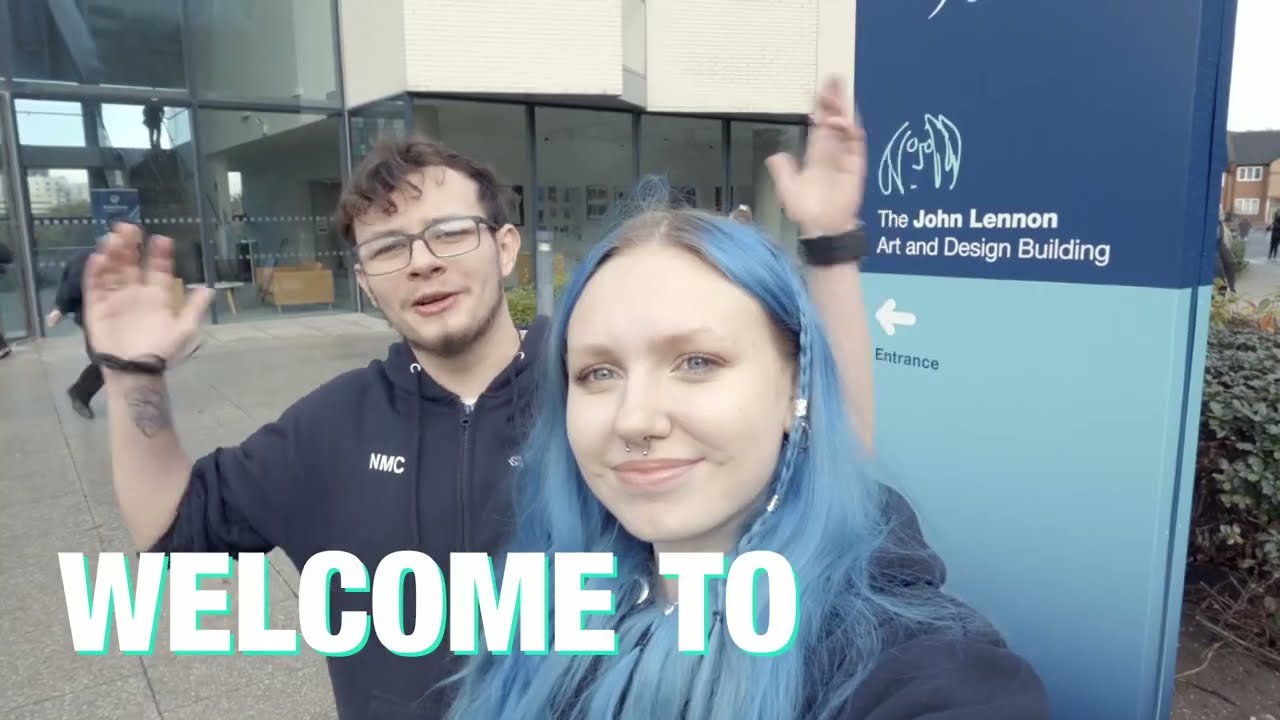
Take a guided tour of the School of Art and Creative Industries
Course modules
What you will study on this degree
Further guidance on modules
Modules are designated core or optional in accordance with professional body requirements, as applicable, and LJMU’s Academic Framework Regulations. Whilst you are required to study core modules, optional modules provide you with an element of choice. Their availability may vary and will be subject to meeting minimum student numbers.
Where changes to modules are necessary these will be communicated as appropriate.
Core modules
Fundamentals of Performance
20 credits
20 credits
This module helps you develop your understanding and application of a range of key ideas about acting and performance as a fundamental grounding for the rest of your studies.
Beginning in the studio it establishes a shared practical working vocabulary of performance for all students, including games, voice & movement exercises and warm-ups. We will begin a conversation here, exploring the difference between performances of self and of character. From this basis we begin to apply these skills to platforms across different multimedia forms (live, online, mediated and on screen), considering how they differ in process and application.
Lastly it begins the process of establishing regular reflection on and evaluation of your own practice as a crucial part of your ongoing professional development and lifelong learning.
Understanding Engaged Practice
20 credits
20 credits
You will be introduced to the fundamentals of Socially Engaged Practice, tracing its historical origins and examining its contemporary context. Key practitioners in the field will be highlighted, along with their works and motivations. This exploration will enhance your understanding of the politics and implications of participation and agency within socially engaged art.
You will analyse various methods employed by socially engaged practitioners to engage their audiences, including audio, virtual reality (VR), immersive experiences, live art, and gaming. This analysis will prompt students to critically consider the ethical, environmental, and reflective responsibilities inherent in socially engaged practice.
You will develop your understanding by collaborating on a project design responding to briefs from external organisations seeking creative solutions to social issues, such as museums, schools, or hospitals. Working in small groups, you will develop and present a pitch that responds to the brief, incorporating all elements of responsible socially engaged practice.
Professional Practice 1
20 credits
20 credits
This module provides you with an exploration of potential employment routes in the fields of performance, production, and socially engaged practice. Through a series of practical, work-based lectures, you will engage with the theories, methodologies, and practical skills relevant to each employment area. The module aims to equip you with the ability to articulate transferable skills and to network with industry professionals, thereby enhancing your employment prospects. The module is structured into five main sections, each focusing on a specific role within the performance, production, and socially engaged practice sectors. Each section spans two weeks and includes lectures led by tutors and industry specialists. This structure allows for both theoretical understanding and practical application. You will receive up-to-date and relevant training that aligns with contemporary employment opportunities.
Storytelling
20 credits
20 credits
This module is designed to immerse you in the art of storytelling through an interdisciplinary lens, incorporating a range of mixed media methods. It aims to equip you with the skills and techniques necessary to craft and perform compelling narratives that reflect personal, political, and social themes. By the end of this course, you will have developed a robust understanding of how to engage audiences through diverse storytelling practices. An interdisciplinary approach is central to this module. This approach will be complemented by exploring cultural and historical contexts, enriching your narratives with depth and authenticity.
Collaborative Project
20 credits
20 credits
At the heart of your degree is the skill of collaboration and it is your developed knowledge and experience of creative collaboration that will enhance your success in the Creative Industries after you graduate. This module introduces you to approaches and encourages you to work collaboratively in a variety of roles: writer, director, technician, actor, content creator and so on and across a variety of possible formats. Live, recorded, online, immersive, environmental or any combination that seems creatively appropriate.
It will help you develop a shared vocabulary of performance across a range of media and it will encourage you to reflect on how successful the interdisciplinary approach has been for you as an artist and for the group as a collective.
Introduction to Production
20 credits
20 credits
Introduction to Production Skills is a practical and creative course aimed at familiarising you with performance technology while fostering a collaborative and creative environment. This module offers an exploration of various skillsets including Lighting, Sound, Projection, and Multimedia.
Many individuals unfamiliar with technology may initially feel apprehensive, but this module aims to dispel such fears by demonstrating the vital, intriguing, and highly creative role technology plays in production. Providing a suitable technical backdrop for a performance requires both dedication and imaginative thinking. This module centres on collaborative creation, fostering a deeper appreciation for the technician's role through both theoretical knowledge and practical application.
Core modules
Interdisciplinary Performance
20 credits
20 credits
This module introduces you to cutting-edge practitioners and innovative approaches, encouraging you to explore ways to push the boundaries of traditional performance. You will learn about and experiment with interdisciplinary performance practices, theories, and creative methodologies in both live and recorded settings, (and the spaces in between).
By adopting an interdisciplinary approach, you will develop the ability to think creatively and adapt to diverse performance environments—essential skills for the ever-evolving creative industries.
The module embraces an interventionist perspective, challenging you to create performances that provoke thought and inspire change.
Socially Engaged Practice
20 credits
20 credits
Working in groups, using interdisciplinary techniques, you will develop an effective performance event to a specific brief and for a specific market, community or client. You will be given a range of options and will be asked to choose and respond to a particular client.
Working collaboratively, you will produce a forward presentation reflecting reasons for the choice of project and exploring the artistic, ethical and, social concerns/ interests that are at the heart of your chosen area of study and creative development. You will evidence your ability to work both independently and collaboratively to create content that responds to the Client brief and transform your research and development into the delivery of a practical project within the time and scoping requirements directed.
Advanced Production Skills
20 credits
20 credits
This module will enhance your ability to use various technical elements creatively across all forms of performance. You'll learn advanced lighting control, sound recording and editing, and show control. You will also create and manipulate projections using AI and existing images.
This module prepares you for the role of a technical creative manager, equipping you with advanced skills for diverse performance environments.
Production Management
20 credits
20 credits
This module focuses on equipping you with the skills needed to establish and manage your own creative company, guiding you through the intricacies of production management within the arts. Throughout the module, industry professionals will provide insights into various facets of production management, from managing funding and budgets to effectively marketing and selling your creative endeavours to both corporate entities and the public.
Specialist Practice
20 credits
20 credits
This module will provide you with the opportunity to explore a specialist application of performance in a form that you may not have previous experience of. Introductory workshops will introduce you to the format, the contextual history and current industrial relevance. You will consider examples of practice and the component requisite skills to produce work in this specialist discipline. You will also build an understanding of the production ‘workflow’ before applying the knowledge in the inception and creative development of group projects. During that process you may perform and/or produce, but are also encouraged to develop new skills in a production context that you are less familiar with. You will also consider the promotion and dissemination of that work to a target audience, with such things as poster design, social media application, trailers and so forth. Projects on offer will range and may be delivered collaboratively with other programmes. As an indicative example they may include live event projects (comedy, DJ sets, Live Art, radio presenting, gig) , or digitally produced projects (filmmaking, podcasting, immersive production, audio-drama, vlogging, audio books, music production, news presentation). This list is indicative only. Throughout the project, you will document your process and maintain a reflective journal.
Work Based Learning
20 credits
20 credits
This module will help you expand your contacts and apply your knowledge and skills in a real work setting. By combining academic learning with practical experience, it will develop your professional skills, enhance your employability, and deepen your understanding of the industry. Through direct workplace experience, you will gain new skills, develop existing ones, build professional networks, and explore career paths.
The module's learning experiences are formulated in partnership with employers to address current workforce requirements. This can be done through either a placement or client brief setting.
Students negotiate a learning contract with an employer/client and a tutor, and are assessed on their contribution to fulfilling the contract, the quality and impact of their work and their reflections on professional development.
Work-based learning contracts might include (but not limited to) work in relation to City Council initiatives and related community organisations projects, teaching/workshops in local schools, funding bid applications, research-related projects and Practice as Research projects, etc.
Optional modules
Study Year Abroad – Performance and Production
120 credits
120 credits
The aim is to provide students with an additional year of study at an approved overseas partner that will complement their programme at LJMU. This is an additional year of full-time study at an approved higher education institution. The modules to be studied must be agreed in advance, and must be appropriate for the student's programme of study. Assuming successful completion of this year, mark-bearing credit will be awarded by the University Recognition Group. The grade conversion scale to be used will be made available in advance of the year abroad.
Core modules
Lift Off
20 credits
20 credits
This module will prepare students for their independent project through forming, researching, developing, and pitching projects and ideas. It is designed to encourage students to speak from their own artistry and define their interests and developments connecting their prior learning with their onward trajectory and career goals.
Students will work both independently and collaboratively to define roles and contributions to a range of projects through the creation of an independent research document. They will document a range of critical, creative, and practical approaches to undertaking the independent project and demonstrate their responsibilities to ethical, sustainable, artistic and creative approaches to performance and production.
Students will be required to reflect on prior learning and connect with future career aspirations and goals. They will be required to identify a project (solo or group) in relation to their learning development in performance and production. They will demonstrate and set out their role and responsibilities in creating the project, identifying risks, challenges and opportunities. They will evidence feedback and forward thinking through criticality to demonstrate research and knowledge related to the creation of their project.
Professional Practice 2
20 credits
20 credits
The module seeks to enhance your confidence in crystallising your personal employment identity and career plan, in the following ways:
- Building on skills from PP1, you will explore and engage with alternative funding opportunities, learning to develop projects that meet the requirements of available funding schemes and commissions.
- Through valuable networking opportunities with invited industry professionals, you will enhance your practical knowledge of applying for real-world jobs and participating in relevant interview processes. Students will engage in professional simulations, selecting from a series of employment opportunity categories set up at the start of the module. You will research and create professional cover letters and CVs tailor.ed to specific job descriptions. Subsequently, preparation for interviews, auditions, workshops, screen tests, or skills tests will be conducted, and ultimately observed by a team of professionals (working in sectors relevant to the employment opportunities offered) and marking tutors who will provide feedback/feedforward.
- The module also allows opportunities for developing essential industry micro-credentials that you can add to your CV.
Finally, you will be supported in creating and presenting a reflective account of your experiences, culminating in a career plan and articulating your future career trajectory with supporting evidence.
Specialisms
20 credits
20 credits
In this module you will be further able to develop specialist skills and knowledge in a discipline area of your choice. Following the first through weeks, you will propose a project and present a schedule for the work. For the work itself, you will each produce a short piece or practical example (artefact) that can be in any form that suites your specialist interest and develops one or more requisite skill (for example live, voice or film performance, immersive practice etc).
You should use the project to identify and develop experience in a specialist skill that interests you, you should submit this with your preliminary research which might include scripts, designs, research, blogs or journal notes as appropriate to your project. The emphases of the module is on the development of a key - this could be performed or technical in quality.
Personal Professional Portfolio
20 credits
20 credits
This module helps you to identify and create the necessary artefacts and platforms for presenting yourself professionally, as appropriate to your identified specialism. It will help you develop the understanding of who you are as an artist and translate that into an effective digital visual presence.
A series of workshops and guest specialist lecturers will teach the range of skills required to cover the areas listed, and you should aim to create material week-on-week.
Each student will be assigned a tutor who is available for tutorial support for four 30-minute sessions (total 2 hours) during the delivery of the module and/or preparation for assessment submission.
Independent Project
40 credits
40 credits
This module is a cumulative demonstration of skills as well as critical and creative approaches developed throughout the course. Students will participate in an independent project (solo or group work) undertaking specific functions and roles to bring about the creation of the project. The project must directly apply learning from the degree e.g., creating a socially engaged project, a performance at a museum, a film screening or a radio drama broadcast, a solo or group performance, or may be a tech design (immersive set), as examples. The role undertaken will be discussed and agreed upon with tutors to ensure comparability and fairness as well as appropriateness to study.
Students will demonstrate the consolidation of their learning through their agreed contribution which should demonstrate their abilities in artistic, production, technical, administrative, socially engaged, or other relevant skill work. They will evidence their ability to work autonomously as performance and production practitioners both independently and collaboratively as well as with a range of stakeholders and partners as relevant to the project and to bring about their critical and creative learning into the delivery of a practical project within the time and scoping requirements directed.
Following the delivery of the project, students will make a public presentation that demonstrates how the project was achieved, critically reflect on their learning experiences, and connect to their onward implementation of learning from the project to future work. Students will be supported through tutorials where students will evidence work in progress through rehearsal, demonstration, and discussion. Students will take the lead in seeking support from their project supervisor and in ensuring ethical compliance. The tutor (supervisor) will provide guidance and direction and should be the point of contact for clearing all risk assessments and consents for ethical practice.
Your Learning Experience
Excellent facilities and learning resources
From the moment you join the course, we will be exploring the endless possibilities in contemporary performance making.
From day one, you’ll be introduced to a wide-range of creative techniques and ideas, giving you the freedom to experiment and discover what truly excites you.
By the time you reach your final year, you’ll have honed the skills and tools needed to specialise in an area you’re passionate about, bringing your unique vision to life through your final project.
Assessment varies depending on the modules you choose, but will usually include a combination of exams and coursework.
We appreciate that all students perform differently depending on how they are assessed, which is why we use a combination of assessment methods.
The programme uses a varied range of assessment process to enhance and strengthen the student experience, including the practical production of performances and artefacts (both digital, live and a mixture of both), essays (both written and recorded), presentations, journals and reflections.
Where you will study
The Liverpool School of Art and Creative Industries is based in the Redmonds Building, in the heart of the bustling Mount Pleasant Campus and Liverpool's growing Knowledge Quarter. The building is home to high quality lecture theatres and seminar rooms, TV studios, radio suites, green screen, editing rooms and newsrooms, social spaces, and a café. It is only a short walk from LJMU's Mount Pleasant Campus Library, which contains all the resources you will require for your studies.
Performance and Production students also have exclusive access to the John Foster Drama Centre, where you will hold performances, rehearsals and castings. The Drama Centre has been home to LJMU's Drama teaching for a number of years and has hosted a wide variety of performances, it has dressing rooms, a café bar and wardrobe rooms so you will be immersed in a real-world drama environment for the duration of your studies.
Course tutors

Dr. Demetris Zavros is Programme Leader for BA Performance and Production at Liverpool John Moores University.
A theatre-maker, composer, and director, he has collaborated with renowned institutions such as the National Theatre of Greece, the State Theatre of Cyprus (THOC), the National Theatre of Northern Greece, Nowy Teatr in Poland, and West Yorkshire Playhouse, among others.
His research interests include contemporary theatre and performance praxis; intermedial and interdisciplinary approaches; composed theatre, theatre music and music theatre. His current projects focus on notions of musicality, polyphony and chorality and the ways these notions can inform the aesthetics and politics of theatre and performance.
BA (Hons) Performance and Production was validated with seven commendations including for its consultative engagement with industry, the teaching team, the programme design and employability. When designing the degree, we engaged with a wide range of external stakeholders, including Invisible Wind Factory, Focal Studios, 20 Stories High, Unity Theatre, Shakespeare North, Big Heritage, Noel Jones (Projection Artist), Adam Bee (large scale touring theatre Chief Technician), P&O Cruises, Culture Liverpool, and Liverpool City Council—Community, Neighbourhood, Events, and Heritage teams. All stakeholders agreed that the programme is timely, relevant, and addresses the needs of the artistic and cultural sector. Many commented on the collaborative nature of the design and its emphasis on interdisciplinary practice, noting how this approach mirrors the current artistic landscape.





Career paths
Opening doors to a wide range of careers
Liverpool is a city so full of life it's often called the "Pool of Life" and the perfect place to start your student journey.
You've probably heard about London's cultural scene, but did you know Liverpool has more theatres, galleries, and museums per capita than any UK city. That's probably why in 2024, the city was ranked 7th best city in the world for arts and culture by Time Out. Whether you're into huge gigs at the M&S Bank Arena or discovering new artists in a small, independent venue, the city's nightlife and music scene are always buzzing.
The culture here is everywhere. Walk along the stunning waterfront and you'll find the Tate Liverpool, Museum of Liverpool. You will catch major events like the Liverpool River Festival, The Liverpool Music Festival and Pride celebrations.
But it's not all performance and art. Liverpool is a leader in tech, creativity and production. This is the city that gave us Psygnosis, the company behind the classic Wipeout game, and it’s now the second most-filmed city in the UK. Liverpool is creating two new sound stages at the old Littlewoods building, so you'll be studying in a city at the heart of the action.
Above all, Liverpool is famous for its friendly, welcoming people, its passion for culture, and its lust for life. When you join us at LJMU, you'll feel right at home.
Career paths
Be inspired by our graduates who now work in industry across the world in a variety of roles. They all started right here at LJMU.
Your future begins now. Are you ready to get started?
Actors:
- Claire Foy – The Crown (Netflix), Little Dorrit, Wolf Hall (BBC) A very British Scandal (Amazon)
- Freya Parker – BBC with her own sketch show ‘The Lazy Susans’, with appearances in Wonka, Jurassic World Dominion to name a few
- Jon Furlong – Ghosts (BBC), The Last Kingdom, Adolescence (Netflix), National theatre
- Amaka Okafor – The Responder (BBC), Bodies (Netflix), National theatre, Royal Court, London
Artistic Directors:
- Eli Randle – Unity Theatre, Liverpool
- Gordon Millar – Edinburgh Playhouse
Cruise ships:
- Adam Maxwell – Cruise ship director – Carnival cruise ships
- Charlie Dunn – Technical operator - Carnival cruise ships
Designers:
- Roisin Quinn – 2024 winner of BBC interior design masters.
- Josh Hale– Lighting designer – Kenwright Productions
Digital Creators:
- Sammy Gray and Courtney Reynolds aka @grayskitz 2.5 million followers
- Jerome Griffin aka @theScouseGhettoGourmet 200,000 followers
Directors:
- Ellie Hurt – National theatre, Liverpool Everyman, Shakespeare North
- Gitika Buttoo - National theatre, Liverpool Everyman, Shakespeare North
Radio Presenters:
- Melissa Riddell – Cool FM
- Natalie O’Leary - Radio 1
Screen Producers:
- James Taylor – Executive producer Avalon TV - Taskmaster, Russel Howard’s half hour, Man Down
- Amy Southey – Producer – Love Island
Secondary School Teachers:
- David Kent
- Caroline Bleakley
Theatre companies:
- Ugly Bucket
- Dramatic Recovery
Writers:
- Esther Wilson – BBC TV, BBC Radio and stage (Liverpool Everyman and Playhouse).
- Joe Ward Munro - BBC TV and stage (Liverpool Everyman and Playhouse).
Student Futures - Careers, Employability and Enterprise Service
A wide range of opportunities and support is available to you, within and beyond your course, to ensure our students experience a transformation in their career trajectory. Every undergraduate curriculum includes Future Focus during Level 4, an e-learning resource and workshop designed to help you to develop your talents, passion and purpose.
Every student has access to Careers Zone 24/7, LJMU's suite of online Apps, resources and jobs board via the LJMU Student Futures website.
Tuition fees and funding
- Full-time per year:
- £9,790
Fees
Tuition fees for home students beginning their studies in September 2026 will be £9,790 for the 2026/27 academic year, subject to Parliamentary approval.
In England and Wales, tuition fees for home undergraduate students are set in accordance with the Government’s regulated fee cap. The Government has confirmed that this cap will be £9,790 for 2026/27 and £10,050 for 2027/28, in both cases subject to Parliamentary approval.
The Government has also indicated that from the 2028/29 academic year onwards, the fee cap may be adjusted annually in line with inflation. As a result, tuition fees in future years may increase in line with inflation. We will provide confirmation of any changes as early as possible in advance of each academic year.
The university reserves the right to increase tuition fees in accordance with any changes to the maximum allowable fees set by the UK Parliament.
The fees quoted above cover registration, tuition, supervision, assessment and examinations as well as library membership and student IT support with access to printed, multimedia and digital resources including programme-appropriate software and on campus Wi-Fi.
Financial Support
The University offers a range of scholarships to support students through their studies. You'll find all the information you need on our specialist funding pages, including details of the Student Support Fund and other activities to support with the cost of living.
Additional Costs
In addition to fees, students should also keep in mind the cost of:
- Accommodation
- Travel costs including those for placements, visas and travel for studying abroad and field trips unless paid for by LJMU
- Stationery, IT equipment, professional body membership and graduation gown hire
- Full-time per year:
- £17,750
International Scholarships and payment plans
Liverpool John Moores University is committed to supporting international students by providing a range of scholarships and flexible payment plans to help students manage their tuition fees.
Scholarships
LJMU provides a variety of undergraduate scholarships to support international students. Scholarships are available to self-funded students who have accepted their offer and met all the conditions outlined in their offer letter. Students must also demonstrate that they can cover living costs, travel, and other expenses associated to studying at the university.
All self-funded international students are eligible for an automatic scholarship worth up to £3,000. For more details and to view our full list of scholarships, visit the international scholarship webpages.
Deposit
All students must pay a £5,000 deposit before they can receive their CAS letter.
For more information view our deposit page.
Tuition Fee Payment Plan
After paying their £5,000 deposit, students have the option to pay their fees in full or in three equal instalments minus any internal scholarships and discounts. There are two payment options available for international students. You can either pay your tuition fees in full before enrolment or opt for a payment plan. With the payment plan, you can pay your fees in three instalments after making your £5,000 deposit. The first instalment is due before enrolment.
All payments should be made through Flywire. Full details can be found in the How to Pay Guide.
Applying via Clearing
Minimum UCAS points required: 72
For the latest entry requirements, complete our Clearing Application Form or call our Clearing hotline on 0808 5 564 565.
To find out more about Clearing or sign up to become a Clearing Insider visit our Clearing webpages.
Your university life
From accommodation and academic support to clubs and societies. Find out what LJMU has to offer.
Related Links


Talk to our students
Connect with a current LJMU student for advice and guidance on university life, courses and more.
See what our students are saying
At LJMU we want you to know you're making the right choice by studying with us. You can see what our students are saying about their experience with us through their reviews on the following websites:


News and views
Browse through the latest news and stories from the university


.png)

The university reserves the right to withdraw or make alterations to a course and facilities if necessary; this may be because such changes are deemed to be beneficial to students, are minor in nature and unlikely to impact negatively upon students or become necessary due to circumstances beyond the control of the university. Where this does happen, the university operates a policy of consultation, advice and support to all enrolled students affected by the proposed change to their course or module.
Further information on the terms and conditions of any offer made, our admissions policy and the complaints and appeals process.